Water hardness is relatively stable over time for most households, making retesting frequency lower priority than for some other water concerns.
Retesting hardness is a lower priority than retesting for most other water concerns, and the reason is worth understanding rather than just accepting. Hardness comes from rock the water has moved through, which does not change quickly. What does change is your supply and your equipment, and those are the two things a retest is actually detecting.
- Retesting every 2-3 years is reasonable given hardness’s general stability over time.
- Retest sooner after a source change, new softener installation, or noticed symptom changes.
- Well water owners may benefit from slightly more frequent testing given more potential source variation.
- This is a less frequent schedule than for hazards with more natural year-to-year fluctuation.
General Retesting Interval
Retesting every 2-3 years is a reasonable general interval, reflecting hardness’s general stability tied to consistent underlying geology or municipal source [1].
For a household on a stable municipal supply, once every two or three years is ample, and many people reasonably stretch it further. Hardness in a given distribution system tends to move slowly, and the practical consequences of being slightly out of date on the number are small. You are checking that nothing structural has shifted, not tracking a moving target.
The exception is worth carving out immediately. If you own a softener, the useful test is not annual at all, it is whenever the water starts feeling different. That test also answers a different question. Testing the source tells you what is coming into the house; testing after the softener tells you whether the equipment still works. The second is the one that catches a bridged brine tank or a failed control valve.
When to Retest Sooner
Retest sooner if your water utility reports a source change, after installing a new softener system (to verify performance), or if you notice a change in symptoms like spotting or scale buildup.
Any change in where your water comes from resets the clock. Utilities blend sources and sometimes switch between groundwater and surface water seasonally or during drought response, and the two can differ substantially in hardness. If your utility announces a source change, or if you notice the water behaving differently without any change on your end, retest rather than assume.
Test immediately after any plumbing or treatment work as well. A new softener, a resin replacement, a repaired control valve or a whole-house filter installation all warrant a before-and-after reading, because that reading is the only proof the work achieved what you paid for. Doing it a week later, once the system has settled into a normal cycle, gives a more representative number than testing the same afternoon.
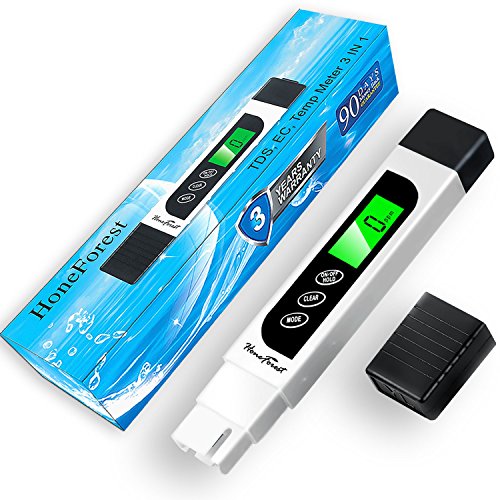
Well Water Owners
Well water owners may want slightly more frequent testing than municipal customers, since well water can show more variation over time depending on aquifer characteristics.
Private wells need more attention, though still not frequent attention for hardness specifically. Annual is a sensible default, largely because you are already testing for the health parameters that genuinely require it and adding hardness costs almost nothing. Nobody else is monitoring a private well, so the entire testing program is whatever you decide to do.
Wells do have real mechanisms for hardness to shift. A dropping water table during sustained drought can concentrate dissolved minerals, and a pump lowered to a different depth may draw from a different formation entirely. Both show up as a step change rather than a drift, which is one more reason to keep old results rather than only the current one.

Choosing a Test Method That Matches the Decision
Test strips are fine for a yes-or-no question and poor for a sizing decision. They read in coarse bands, they are sensitive to how long you hold them and how you read the color, and two strips from the same box can land a band apart. If all you want to know is whether you are in hard water territory at all, a strip answers that for almost nothing.
A titration drop kit is the right tool the moment a number is going to drive a purchase. You count drops of reagent into a water sample until the color turns, and the drop count is the hardness. It is more precise than a strip, still inexpensive, and it is the same basic chemistry a lab uses. Since sizing arithmetic multiplies your hardness by daily water use, an error in that one figure propagates straight through to the capacity you buy.
Send a sample to a certified lab when the result has consequences beyond your own household, such as a real estate transaction, a warranty dispute or a disagreement with an installer about what the water actually is. Lab reports usually arrive in milligrams per liter, so divide by 17.1 to convert to grains per gallon before comparing against anything a United States equipment listing tells you.
FAQ
Do I need to test my water hardness every year?
Not necessarily — every 2-3 years is reasonable given hardness’s general stability, unless you notice symptom changes or make a relevant system change.
My water suddenly feels different. Should I test the source or the softener?
Test both, in that order, on the same day. Comparing the raw reading against the treated reading is what distinguishes a supply change from an equipment failure. Testing only one leaves you unable to tell which of the two happened.
Do I need to retest after a boil water notice?
Not for hardness. Boil notices concern microbiological contamination, which is unrelated to the calcium and magnesium content of the water. Hardness will be unchanged when the notice lifts.
Should I keep old test results?
Yes, and it costs nothing. A single reading tells you where you are; a series tells you whether anything is moving. A photograph of the strip or kit result with the date is enough, and it turns a vague impression that the water changed into something you can actually check.
This general stability assumption applies less reliably to well water — well owners should consider more frequent testing.
References
- Map of water hardness in the United States. U.S. Geological Survey
These statements have not been evaluated by the Food and Drug Administration. This information is not intended to diagnose, treat, cure, or prevent any disease. Content is for informational purposes only and is not medical advice; consult a qualified healthcare provider before starting any supplement. As an Amazon Associate we earn from qualifying purchases.
