A few common mistakes can affect hardness test accuracy, and they are worth avoiding because almost every subsequent decision depends on getting this one number right.
Hardness testing is genuinely easy, which is part of the problem: the steps are simple enough that people skip the ones that look optional. Most bad readings come from procedure rather than from a faulty kit.
- Check test strip condition and expiration date before use, since improper storage affects accuracy.
- Confirm you’re testing the specific water source (softened vs. unsoftened) you intend to measure.
- Follow specific timing instructions precisely for both test strips and titration kits.
- These simple precautions avoid the most common causes of inaccurate hardness readings.
Improperly Stored Test Strips
Test strips exposed to humidity or stored past their expiration date can give inaccurate readings, so check strip condition and expiry before trusting a result.
Strips are reactive by design, which means the bathroom cabinet is one of the worst places to keep them. Steam degrades the reagent pad gradually, and the result is a strip that still changes color but no longer changes it correctly.
Keep the container sealed, keep it somewhere dry, and take strips out one at a time rather than leaving the tube open on the counter. A strip that looks discolored before it touches water should be thrown away rather than used.
Testing Right After Running Softened Water
If your home has an existing softener, make sure you are testing the water source you actually intend to measure, since softened and unsoftened lines will give completely different results.
The common error is testing an outdoor spigot or a kitchen cold tap that was deliberately left on unsoftened supply, and concluding the softener has failed. The reverse also happens: testing a softened tap and concluding the incoming supply is soft.
If you want to know whether your softener is working, the useful test is both: one sample from a softened tap and one from a known unsoftened point. The difference between them is the answer, and either reading alone is ambiguous.
Not Following Timing Instructions Precisely
Test strips and titration kits both have specific timing requirements for how long to wait before reading a color change, and rushing or delaying the read changes the result.
Reading early catches the reaction mid-development and understates hardness. Leaving a strip too long lets the color continue shifting and can overstate it. Both errors are easy to make and neither looks like an error at the time.
Use a timer rather than judgment, and read the strip against the chart in natural light rather than under warm kitchen bulbs, which shift the apparent color enough to move you a band.

Sampling From the Wrong Tap
Where you take the sample from matters as much as how you test it, and this is the mistake that most often produces a confusing result.
Water that has been standing in the pipes overnight is not representative of your supply, because it has been in contact with plumbing for hours. Run the tap for a short while first so you are sampling water that has actually come from the main.
Avoid sampling from a tap with an attached filter, an aerator that has visible buildup, or a mixer where hot water may be blending in. A cold tap you can run cleanly, ideally the one closest to where water enters the house, gives the most useful reading.
Confusing TDS Readings With Hardness
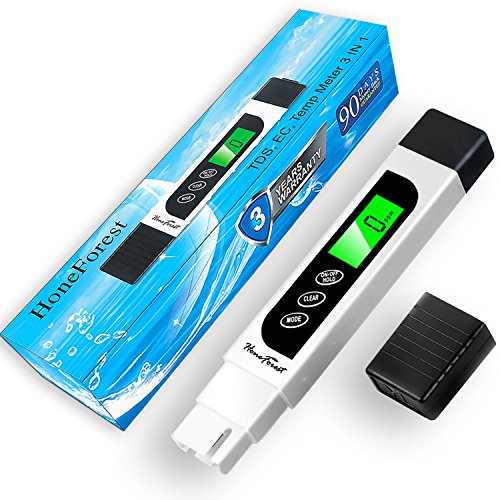
A digital TDS meter is a common purchase for this job and it does not actually measure what most people buy it for.
TDS stands for total dissolved solids, and the meter estimates it by measuring electrical conductivity. Calcium and magnesium contribute to that figure, but so does sodium, so do chlorides, and so does everything else dissolved in the water. A high TDS reading does not tell you which mineral is responsible.
This matters most after a softener, where TDS can stay similar or even rise while hardness has genuinely dropped, because the calcium was exchanged for sodium. If you want a hardness number, use a strip or a titration kit that tests for hardness specifically.
FAQ
Why did my hardness test give a confusing or inconsistent reading?
Check for expired or improperly stored strips, confirm which tap you sampled and whether it is on softened supply, and make sure you followed the timing instructions exactly.
Should I run the tap before taking a sample?
Yes. Water standing in pipes overnight has been in contact with plumbing for hours and is not representative. Run it briefly so you are sampling water that has come from the main.
Does a TDS meter measure water hardness?
Not directly. It measures total dissolved solids via conductivity, which includes sodium and other dissolved material. Use a strip or titration kit if you want a hardness figure specifically.
How do I confirm my softener is actually working?
Test two samples: one from a softened tap and one from a known unsoftened point such as an outdoor spigot. The difference between them is the answer; either reading alone is ambiguous.
Follow your specific test kit’s instructions exactly regarding timing and sample source to get a reliable reading.
These statements have not been evaluated by the Food and Drug Administration. This information is not intended to diagnose, treat, cure, or prevent any disease. Content is for informational purposes only and is not medical advice; consult a qualified healthcare provider before starting any supplement. As an Amazon Associate we earn from qualifying purchases.
